The Real AI Skills Gap Is Not Prompting
Why the durable enterprise AI skills are judgment, verification, and workflow thinking, not prompt formulas, and what that means for upskilling teams.

Prompt training is the easiest AI enablement program to buy.
It is also the easiest one to overrate.
A better prompt can help. It can turn a vague request into a usable draft, make expectations clearer, and help people get past the blank page. For many employees, that is a useful first step.
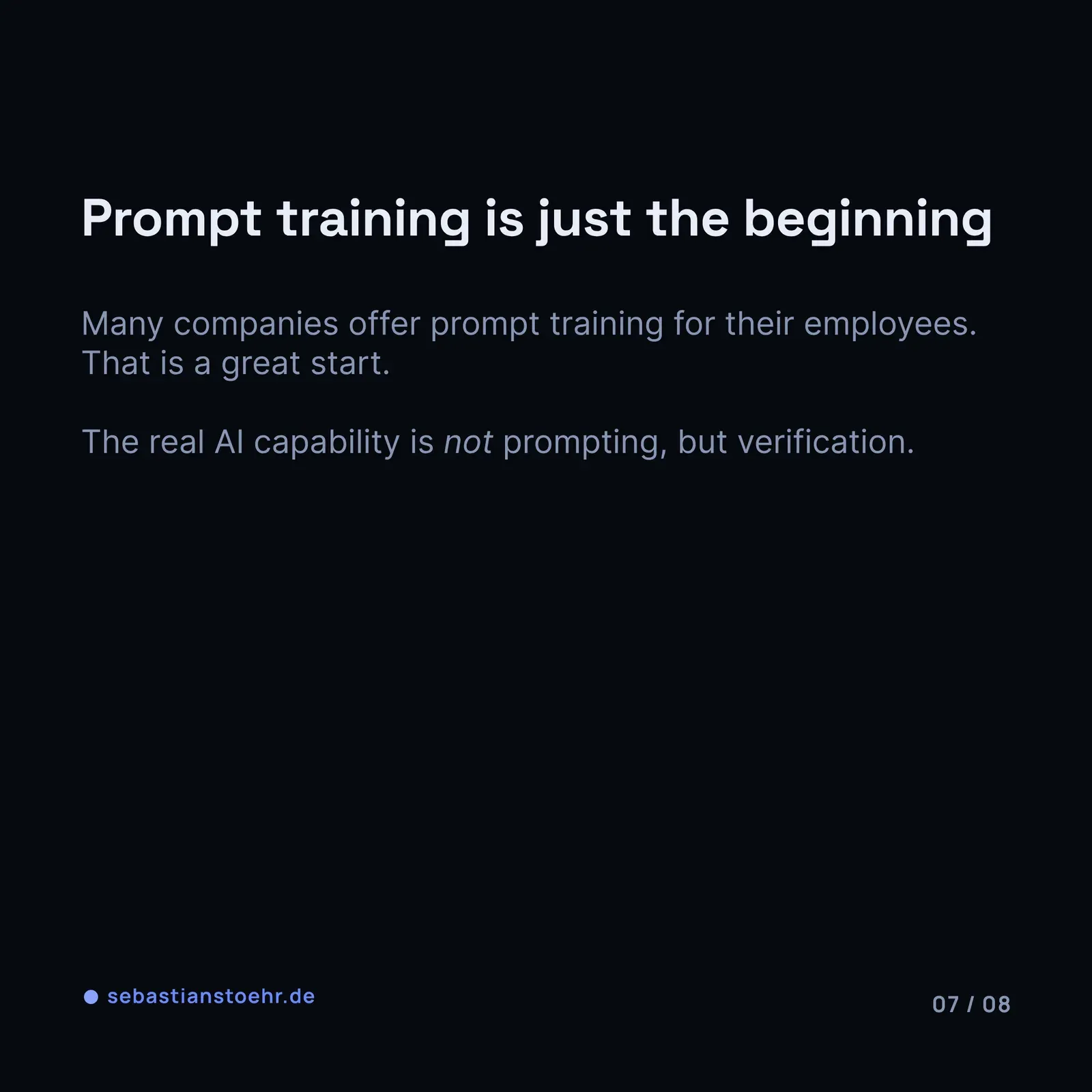
But if the training stops there, companies teach the most visible part of AI work and miss the part that actually protects quality.
The durable skill is not writing the perfect instruction. It is knowing what to trust, what to check, and when to stop.
The deeper skills gap is not that people lack the right prompt formula. It is that many organizations have not yet taught people how to use AI with judgment.
The prompt is only the beginning
The internet is full of prompt recipes: act as this, do that, ask me questions first, use this structure, improve your answer, think step by step.
Some are useful. Some are theater. Many will become less important as tools improve and interfaces absorb the obvious patterns.
What does not disappear is the need to understand the work.
If someone asks AI to summarize a customer complaint, they still need to know what a good summary leaves in and what it must not leave out. If they ask for a policy interpretation, they need to recognize unsupported claims. If they use AI to draft a decision memo, they need to understand the decision, not only the prose.
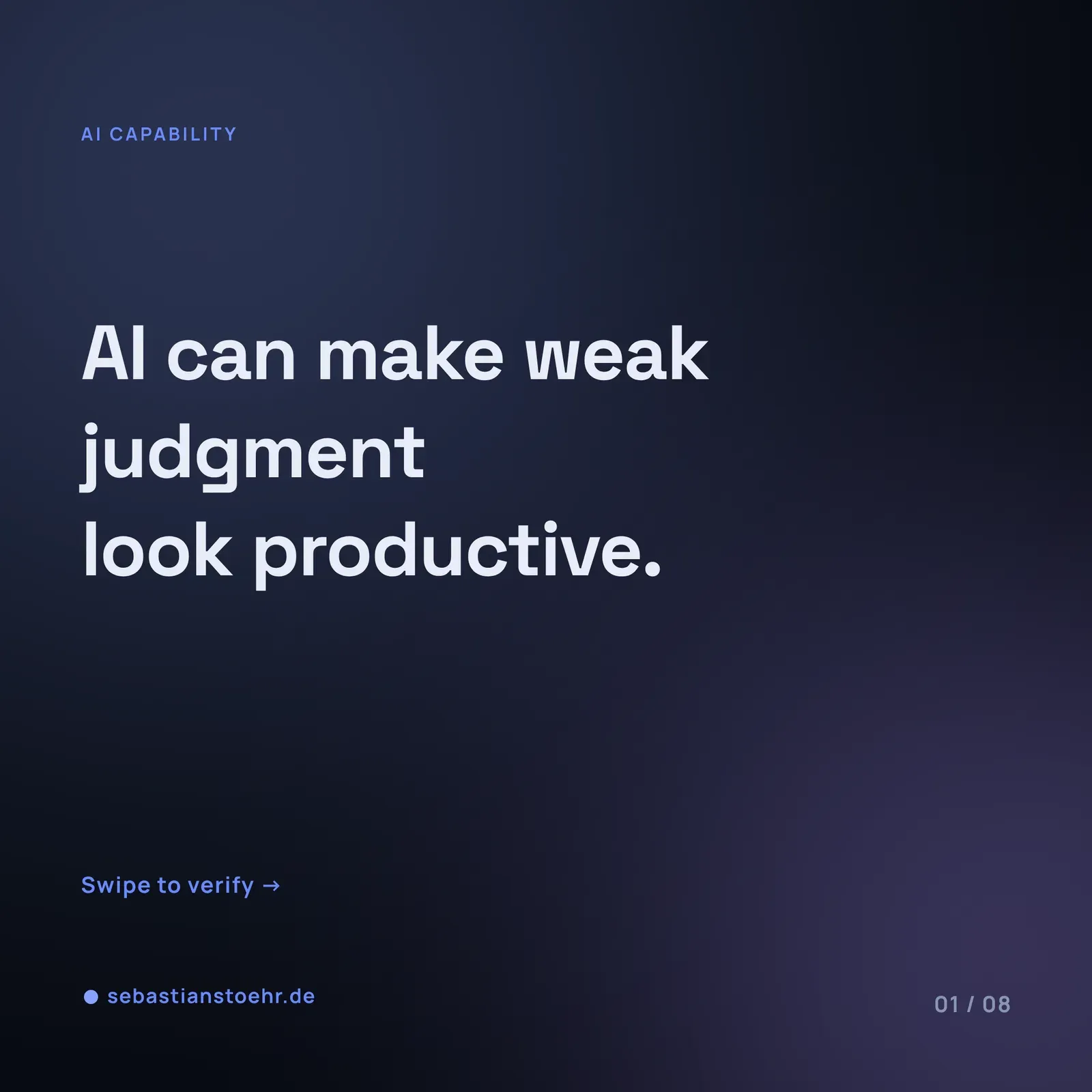
AI makes weak judgment look productive.
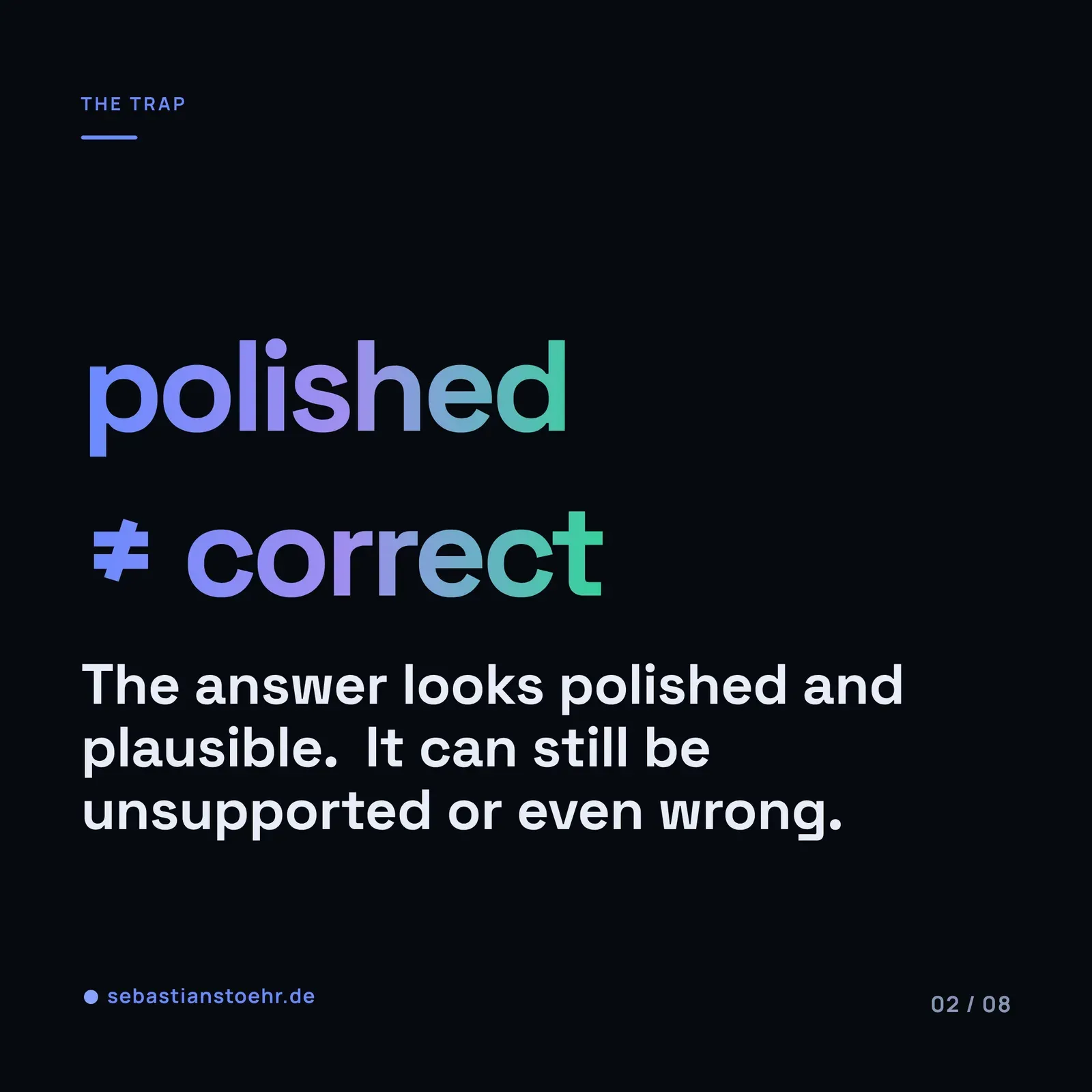
That is the uncomfortable part. The output is fluent enough to feel finished before it has earned trust.
Verification is the baseline skill
For many employees, the most important AI skill will be verification.
Not advanced model evaluation. Not data science. Just the disciplined habit of asking: is this answer supported, complete, current, and safe to use?
That sounds obvious until you watch AI being used under time pressure. The answer looks good. The structure is clean. The tone is confident. The user is busy. The temptation is to move on.
In real work, the difference between useful and dangerous is often not visible in the writing. It sits in missing context, a wrong assumption, an outdated source, or a subtle overreach.
Employees need to learn what to check:
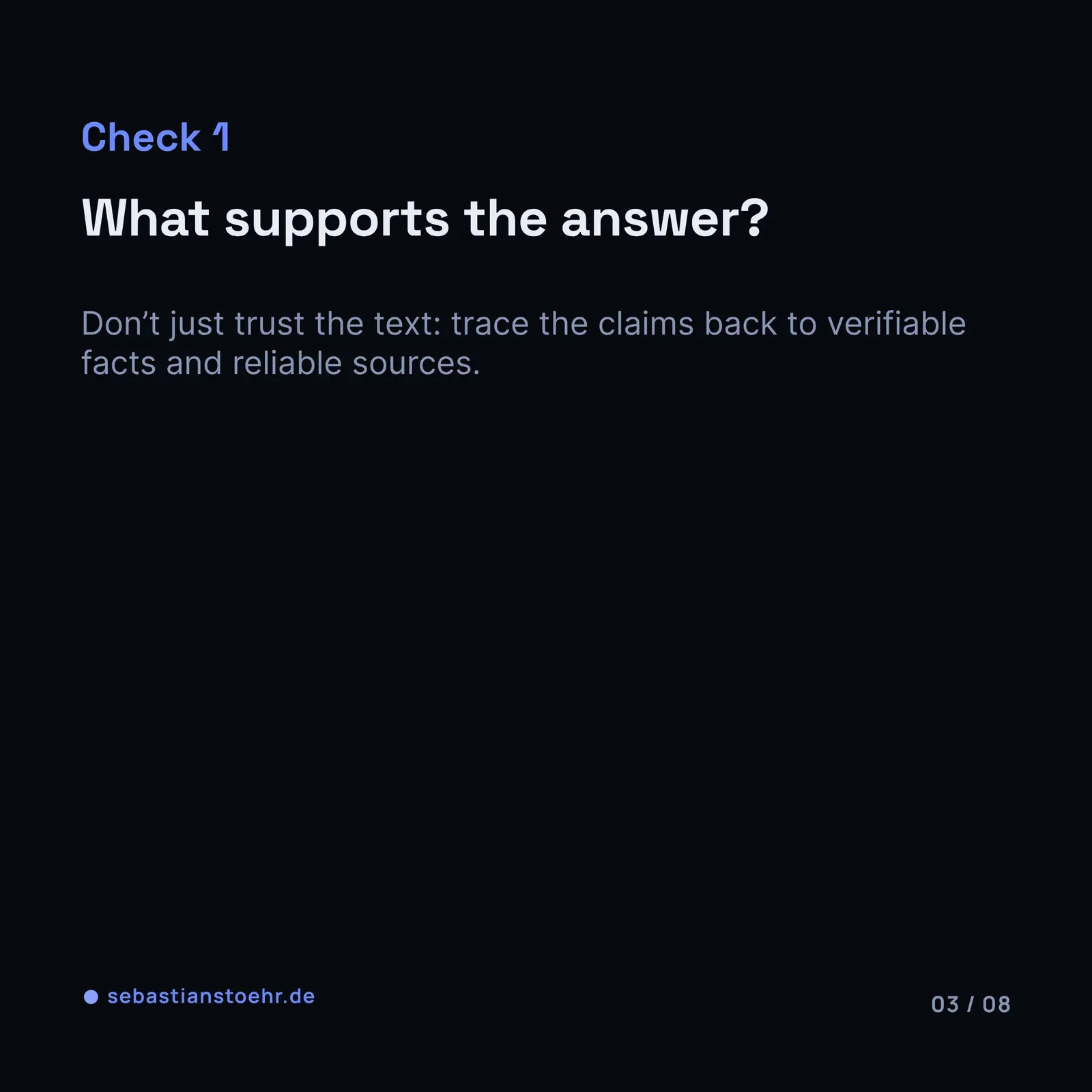
- which source supports this answer?
- what might be missing?
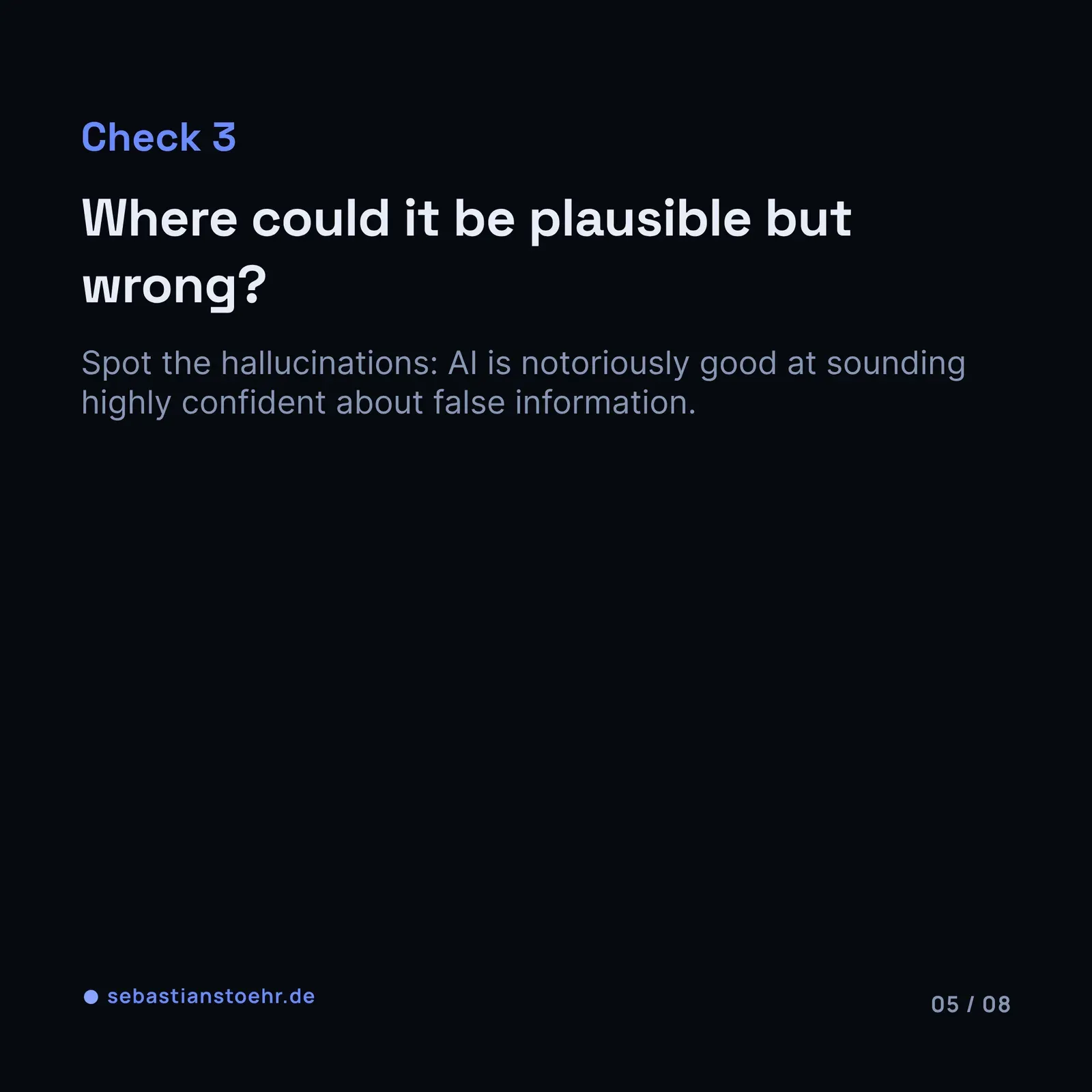
- where could this be wrong but plausible?
- is this suitable for internal use, customer-facing use, or neither?
- does this require a human decision?
- what would I need to know before trusting it?
That is not a prompt trick. It is professional judgment applied to AI output.
Workflow thinking matters more than clever wording
Another underrated skill is workflow decomposition.
People often ask AI to “do the task.” That works for small, low-risk work. It breaks down when the task has inputs, decisions, exceptions, handoffs, approvals, and consequences.
A skilled AI user can separate the work:
- gather the relevant context
- structure the information
- identify missing pieces
- produce a draft
- compare against criteria
- flag uncertainties
- prepare a human decision
That is a very different way of working from “write this for me.”
It also makes AI safer and more useful. The user stops treating the model like a magic worker and starts treating it like a component in a process.
This is where many enterprise use cases improve. Not because the prompt becomes more elegant, but because the work is broken into parts the system can handle and a human can review.
Knowing when not to use AI
A mature AI user also knows when not to use it.
That skill is rarely included in prompt training because it is less exciting. But it matters.
Not every task benefits from AI. Some work is too sensitive, too ambiguous, too dependent on tacit context, or simply faster to do directly. Some situations require accountability that should not be blurred by generated language. Some decisions need deliberation, not acceleration.
If employees only learn that AI is a productivity tool, they will look for places to use it.
If they learn judgment, they will know where it helps and where it adds noise.
That distinction matters for trust. The fastest way to make people cynical about AI is to force it into work where it makes the work worse.
Managers need this skill too
The AI skills gap is not only an employee problem.
Managers need enough AI literacy to design better work. They need to know where AI can remove friction, where review is necessary, where policies are unclear, and where the team is already using tools quietly.
A manager who only asks “are people using AI?” will get shallow answers.
Better questions are:
- where does AI save time without reducing quality?
- where does it create review burden?
- which outputs are safe as drafts and which require approval?
- what examples should we keep to compare quality over time?
- what do people avoid telling us because the rules feel unclear?
Those questions build capability. Prompt libraries alone do not.
Teach the durable skills
The durable skills are more practical and less fashionable:
- understanding the workflow
- checking sources
- recognizing uncertainty
- reviewing output critically
- protecting sensitive data
- breaking work into reviewable steps
- spotting when AI adds more friction than value
- escalating when the system should not decide
Prompting should be part of AI enablement. It should not be the center of it.
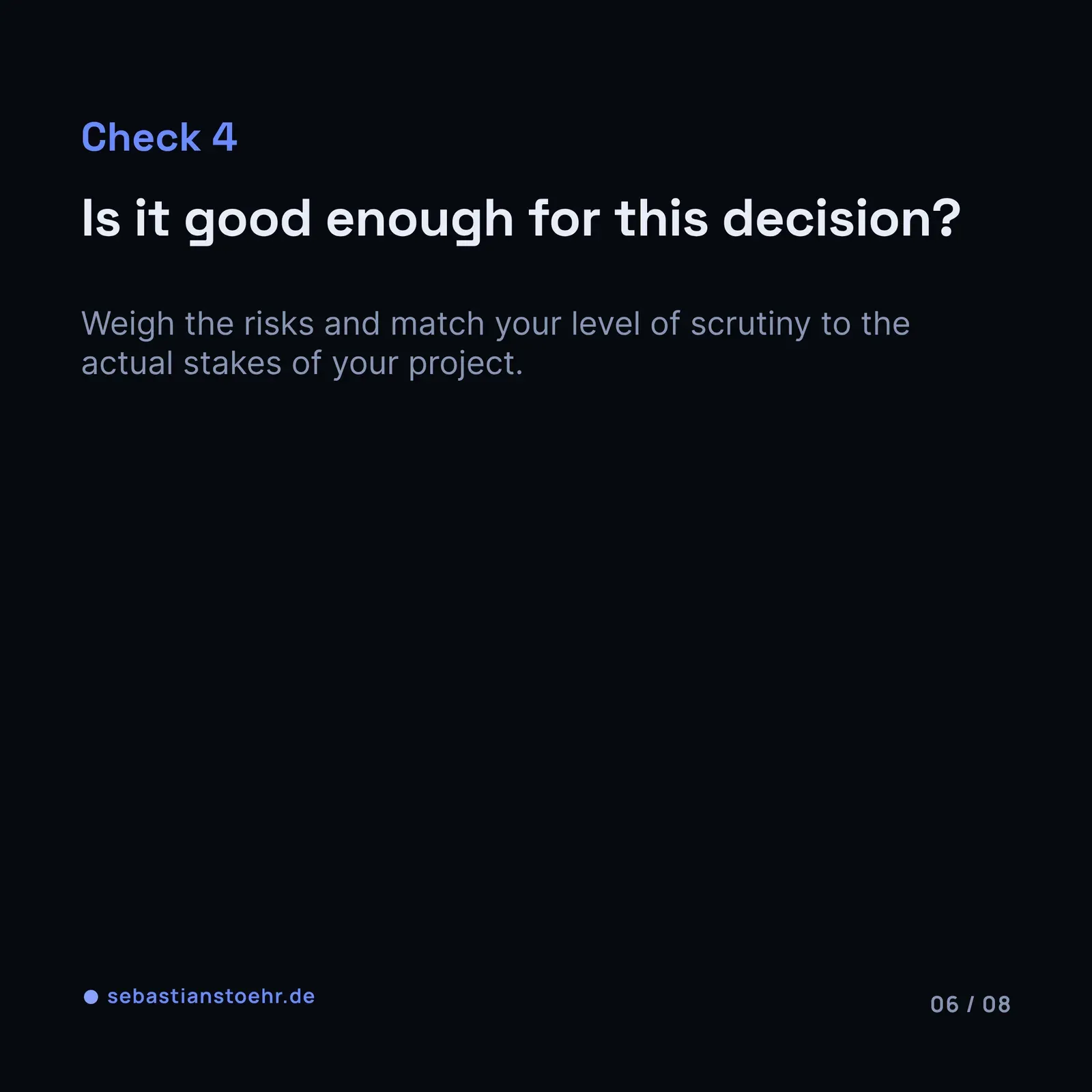
Prompt patterns will change. Interfaces will improve. Tools will hide more of the mechanics. Judgment will still matter because someone has to decide whether the output is good enough for the work it is about to influence.
Better prompts help, better verification compounds

Infographics
The post in a nutshell
Is prompt engineering still the most important AI skill at work?
Prompting helps people get past the blank page, but it is the most visible skill rather than the most durable one. Prompt patterns keep changing as interfaces absorb the obvious tricks, while verification, workflow decomposition and understanding the work itself stay necessary.
How should employees check AI output before using it?
Verification means asking whether an answer is supported, complete, current and safe to use: which source supports it, what might be missing, where it could be wrong but plausible. The difference between useful and dangerous output is usually not visible in the writing — it sits in missing context, a wrong assumption or an outdated source.
When should you not use AI for a task?
Some work is too sensitive, too ambiguous, too dependent on tacit context, or simply faster to do directly, and some decisions need deliberation rather than acceleration. Forcing AI into work where it makes the work worse is the fastest way to make people cynical about it.
What should managers ask about AI beyond 'are people using it?'
Adoption questions produce shallow answers. More useful questions are where AI saves time without reducing quality, where it creates review burden, which outputs are safe as drafts versus requiring approval, and what people avoid reporting because the rules feel unclear.