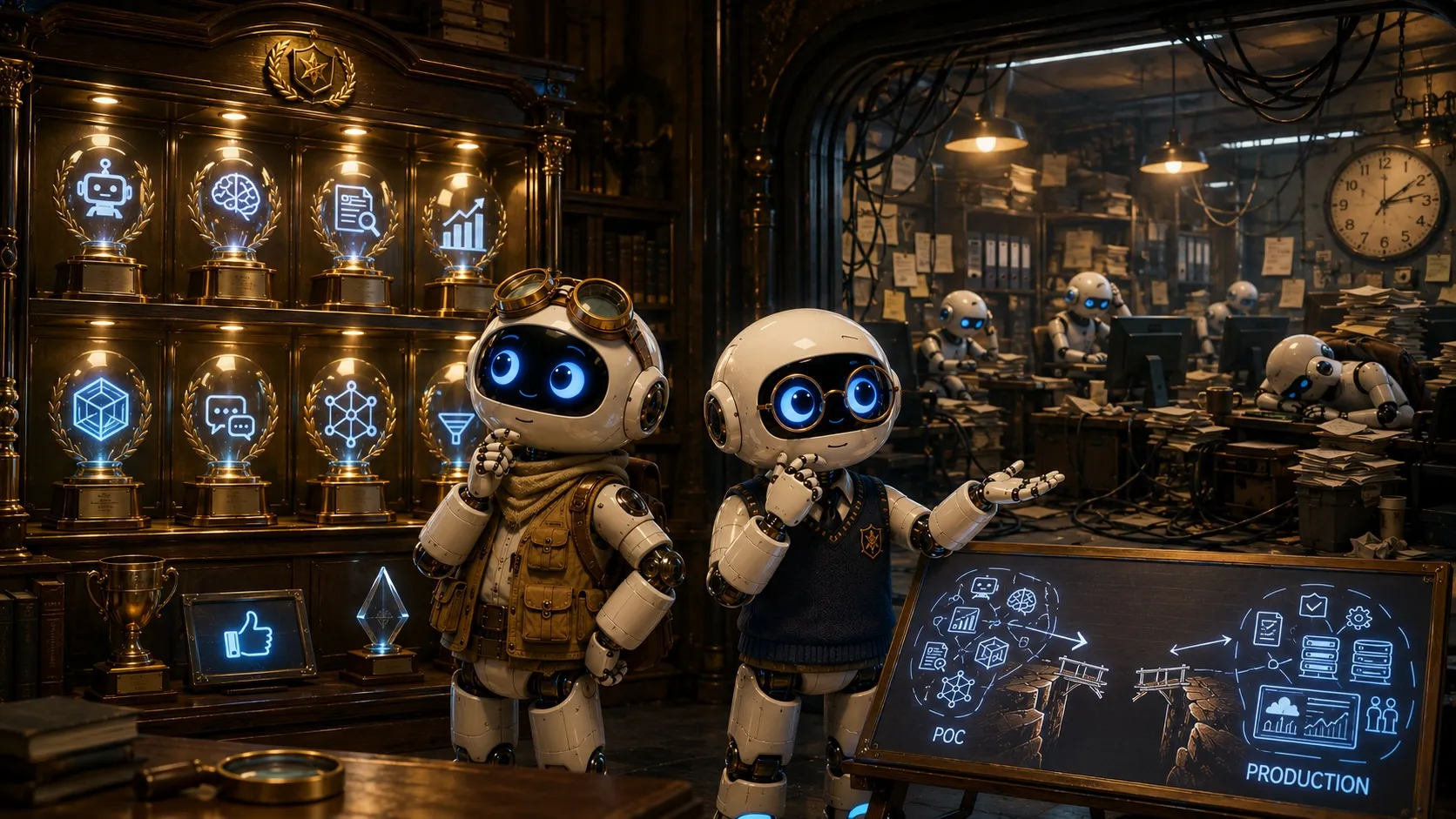
Why AI work stalls somewhere between the demo and daily operation — and the sequence that gets it across: start bounded, say no early, sort the bets, and let evidence buy autonomy.
The pilot worked. That is usually where the trouble starts. A proof of concept answers
one question — can the model do this — and none of the questions that decide whether a
workflow survives a Tuesday in production: who owns it, what happens when it is wrong,
and why anyone should keep paying for it.
This series follows that path in order: why PoCs die on the way to production, why the
agents that survive are the boring ones, how to tell the use cases worth operating from
the ones that only sound good in a steering committee, how to treat a set of AI ideas as
a portfolio rather than a wishlist, and how a workflow earns more autonomy as the
evidence behind it grows.