Escape the AI PoC Trap
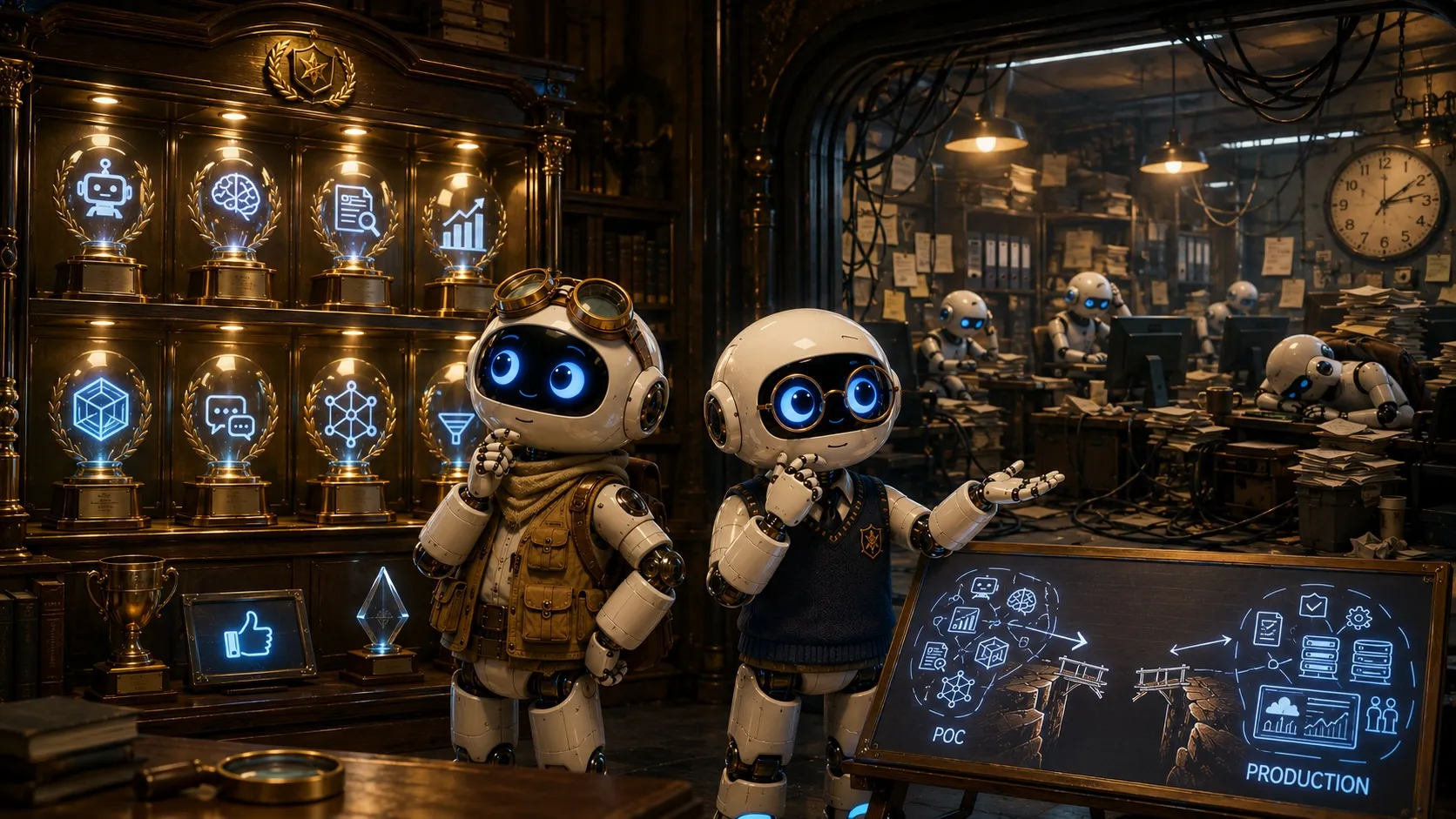
Proof of concepts are valuable. They validate ideas, build momentum, and make abstract technology tangible. A good PoC proves what is possible far faster than any strategy deck.
But many organizations are stuck in a PoC loop. They build one chatbot, summarizer, or classification demo after another. Each one looks promising in isolation. Yet the actual business processes remain entirely unchanged.
The disconnect happens because we confuse technical feasibility with business readiness. Building a prompt that works once in a controlled environment is easy. Building a reliable workflow that survives daily operations requires real product ownership.
The Showcase Trap
PoCs are designed for learning. They evaluate if the data is there and if the model is capable. But PoC mode optimizes for a showcase. You have a narrow scenario, selected clean examples, highly motivated stakeholders, and zero operational pressure.
Production mode is messy. It involves real users working under tight deadlines, complex edge cases, compliance constraints, and underlying source files that constantly change.
A PoC proves an AI workflow can work in general. An AI product proves it can deliver value repeatedly.
Start with the Job, Not the Capability
AI projects usually start with a capability. Someone says we can now summarize documents or search our entire knowledge base.
Capabilities are not use cases. To build an actual product, you must start with a concrete job to be done.
Compare these two project scopes:
- “Build an AI assistant for contract review.”
- “Help procurement managers spot non-standard clauses in supplier contracts before legal review to reduce correction cycles.”
The second statement is actionable. It defines the user, the context, the human boundary, and the specific goal. While building a “universal assistant” sounds impressive in a pitch, generic tools consistently fail to drive real adoption because they do not solve specific problems well enough. Starting small with a highly targeted tool ensures immediate, measurable value. Once that baseline adoption is proven, you can always iterate and expand the scope.
The 5-Question Gatekeeper for Your Next AI Project
Do not fund or start your next AI prototype unless someone takes ownership of these five questions before development begins:
- The Task: What specific, painful task is this solving, and how are users doing it today?
- The User: Who exactly is the target user, and what established habit must they change to adopt this tool?
- The Quality: What defines “good enough” for the output, and what is the exact tolerable error rate?
- The Workflow: What is the human’s exact role? Do they review, edit, approve, or just monitor?
- The Lifecycle: Who owns the maintenance of prompts, context data, and automated tests three months after the demo is over?
Run AI Like a Product
Traditional software breaks predictably and loudly. AI workflows degrade silently. Models update in the background and their behavior drifts. Internal processes shift. If nobody owns the inputs and actively monitors the outputs, the product slowly loses its value.
Transitioning from a prototype to a product means applying classic product management discipline. We need to move away from asking if we can build something with AI. We need to ask who owns the workflow, how it fits into daily operations, and how we measure its actual value.
👉 Stop optimizing for demo applause. Start optimizing for the users who return to the tool week after week because it actually makes their work easier.
The post in a nutshell
Why do so many AI proofs of concept never make it into production?
Most AI proofs of concept stall because technical feasibility gets confused with business readiness. A PoC runs on a narrow scenario with clean examples, motivated stakeholders and no operational pressure, while production means real users under deadline, edge cases, compliance constraints and source files that keep changing.
What should be decided before starting an AI project?
Five questions should have a named owner before development begins: what painful task is being solved and how users do it today, who the user is and what habit must change, what counts as good enough output, what the human's exact role is, and who maintains prompts, context data and tests three months after the demo.
How should an AI use case be scoped?
Scope an AI use case as a concrete job to be done rather than a capability. 'Help procurement managers spot non-standard clauses before legal review' is actionable; 'build an AI assistant for contract review' is not. Generic universal assistants tend to fail on adoption because they do not solve any single problem well enough.