Not Every AI Use Case Deserves to Exist
Why a mature enterprise AI strategy asks whether a workflow is worth operating, not just whether it is technically possible, and when to say no.

Enterprise AI discussions still spend too much time on one question:
“Could we use AI for this?”
Usually, yes. It can summarize, classify, draft, extract, compare, route, recommend, and answer. With enough patience, many demos can be made to look plausible.
That is a low bar.
The more useful question is different:
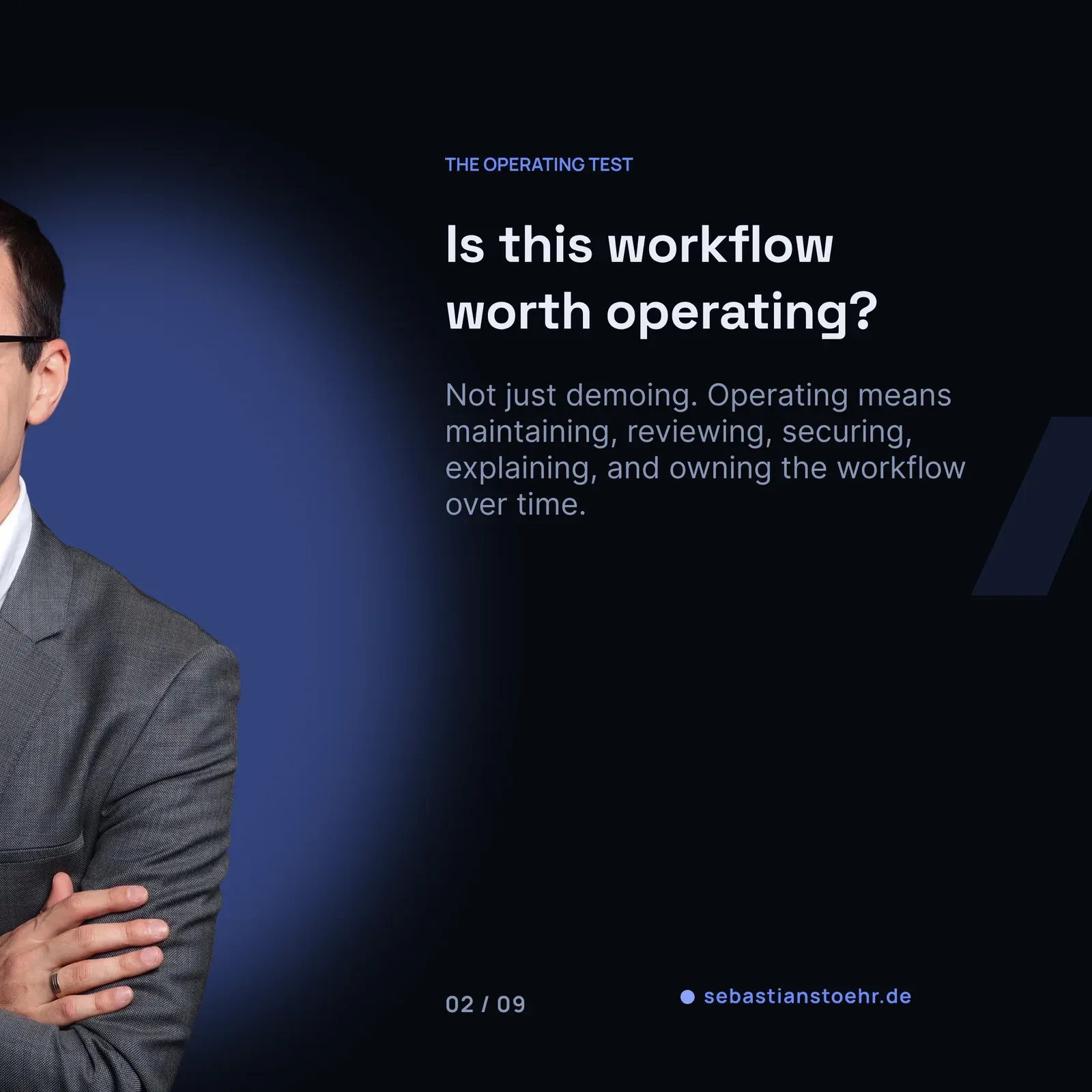
Is this workflow worth operating?
That word matters. Operating. Not demoing. Not prototyping. Not proving that the model can produce one plausible output. Operating means the workflow has to be maintained, reviewed, improved, secured, explained, and trusted over time.
Many AI ideas survive the feasibility question and fail the operating question.
Possibility is cheap now
AI has made possibility cheap.
A motivated person can build a convincing prototype in an afternoon. A tool can be connected to a document set. A prompt can generate structured output. A workflow can appear to work after ten good examples.
That is useful. It lowers the cost of learning.
It also creates a new problem: organizations can produce more plausible AI ideas than they can responsibly absorb.
 Escape the AI PoC TrapStop building AI prototypes that never make it to production. Discover how shifting from isolated tech demos to real product ownership turns impressive showcases into reliable workflows that actually drive business value.sebastianstoehr.de
Every department has candidates. Every process has friction. Every manual task looks like an opportunity when seen through the lens of automation.
If the only filter is “can we do it?”, the backlog becomes a wishlist. And wishlists are not strategy.
The hidden cost is ownership
The visible cost of an AI use case is usually the build: tool licenses, integration, development time, maybe some data preparation.
The hidden cost is ownership.
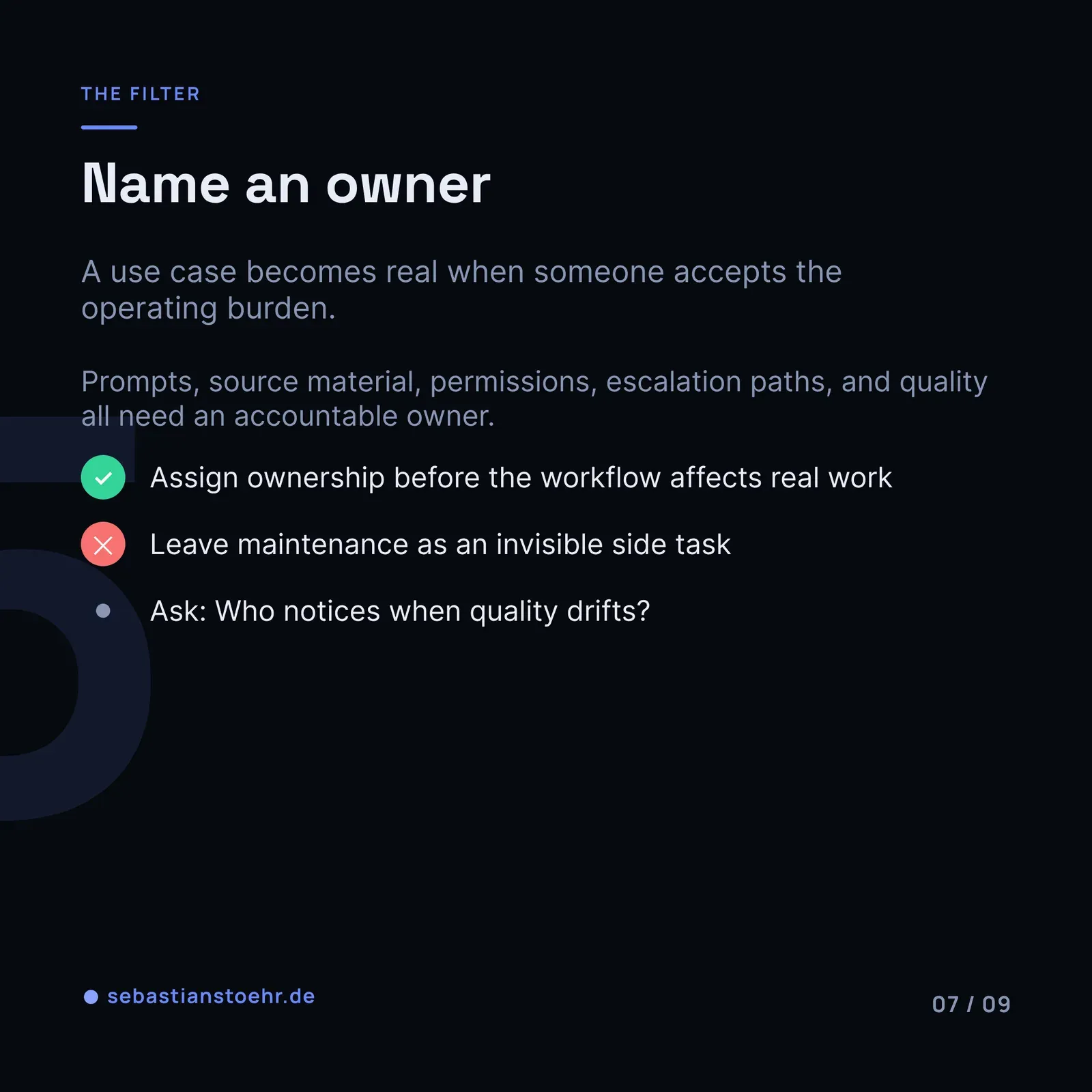
Someone has to decide what good output looks like. Someone has to review failures. Someone has to update prompts, examples, source documents, permissions, and escalation paths. Someone has to explain the workflow when an auditor, customer, employee, or executive asks how it works. Someone has to notice when quality drifts.
For small, low-risk use cases, that burden may be light.
For workflows that affect customers, decisions, compliance, records, or internal trust, it is not light at all.
A use case that saves two hours a month but creates a permanent ownership obligation may not be a win. It may become another piece of invisible infrastructure nobody wants to maintain.
That is why time saved is not enough.
Review effort can erase the benefit
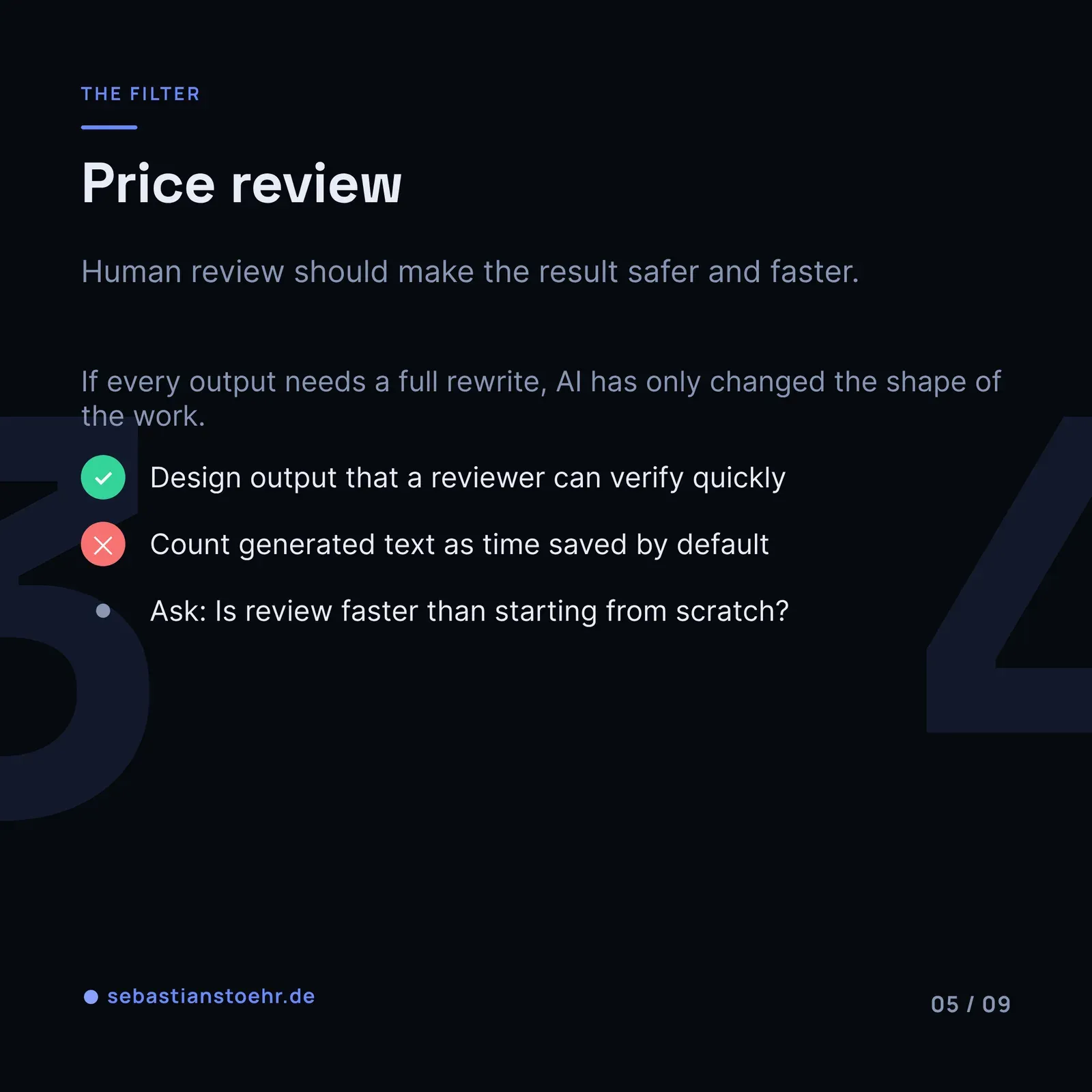
A common AI failure mode is building a workflow where reviewing the output takes almost as long as doing the work.
The demo looks good because the output appears quickly. The real process is less impressive because a human has to check every claim, correct missing context, reformat the result, and still feels accountable for the final version.
At that point, AI has not removed work. It has changed the shape of the work, sometimes for the worse.
This does not mean human review is bad. In many enterprise workflows, review is exactly what makes AI safe and useful.
But the economics have to work. If review is required, the output must be good enough, structured enough, and narrow enough that review is faster than starting from scratch.
 Start With Boring WorkflowsThe agent demos browse the web, write the code, and seemingly do your job. The agents that actually survive inside an enterprise are far less impressive – and that's exactly why they work. A case for starting boring.sebastianstoehr.de
If it is not, the use case may be technically possible and still not worth doing.
Some workflows should stay human
There are also cases where AI adds the wrong kind of speed.
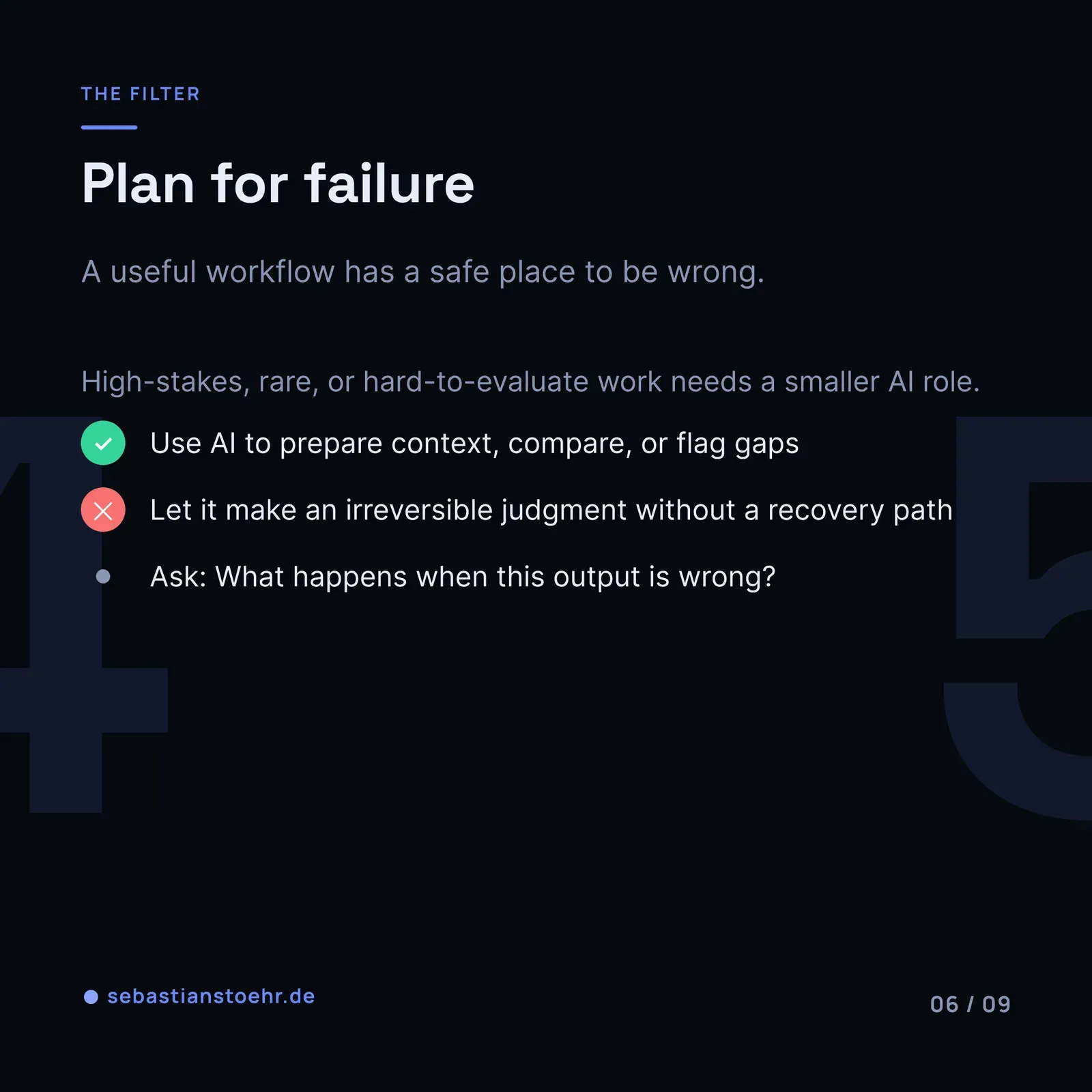
A sensitive employee conversation. A strategic decision that depends on trust and accountability. A judgment call where ambiguity is the point. A customer response where the organization needs to own every word. A task that is rare, high-stakes, and hard to evaluate.
AI may still assist around the edges: preparing context, summarizing background, checking consistency, drafting alternatives.
But replacing the core work may be a mistake.
Mature AI strategy includes the ability to say: not here, not yet, or not in this form.
That is not anti-innovation. It is focus.
Better filters
A stronger use-case discussion starts before the demo.
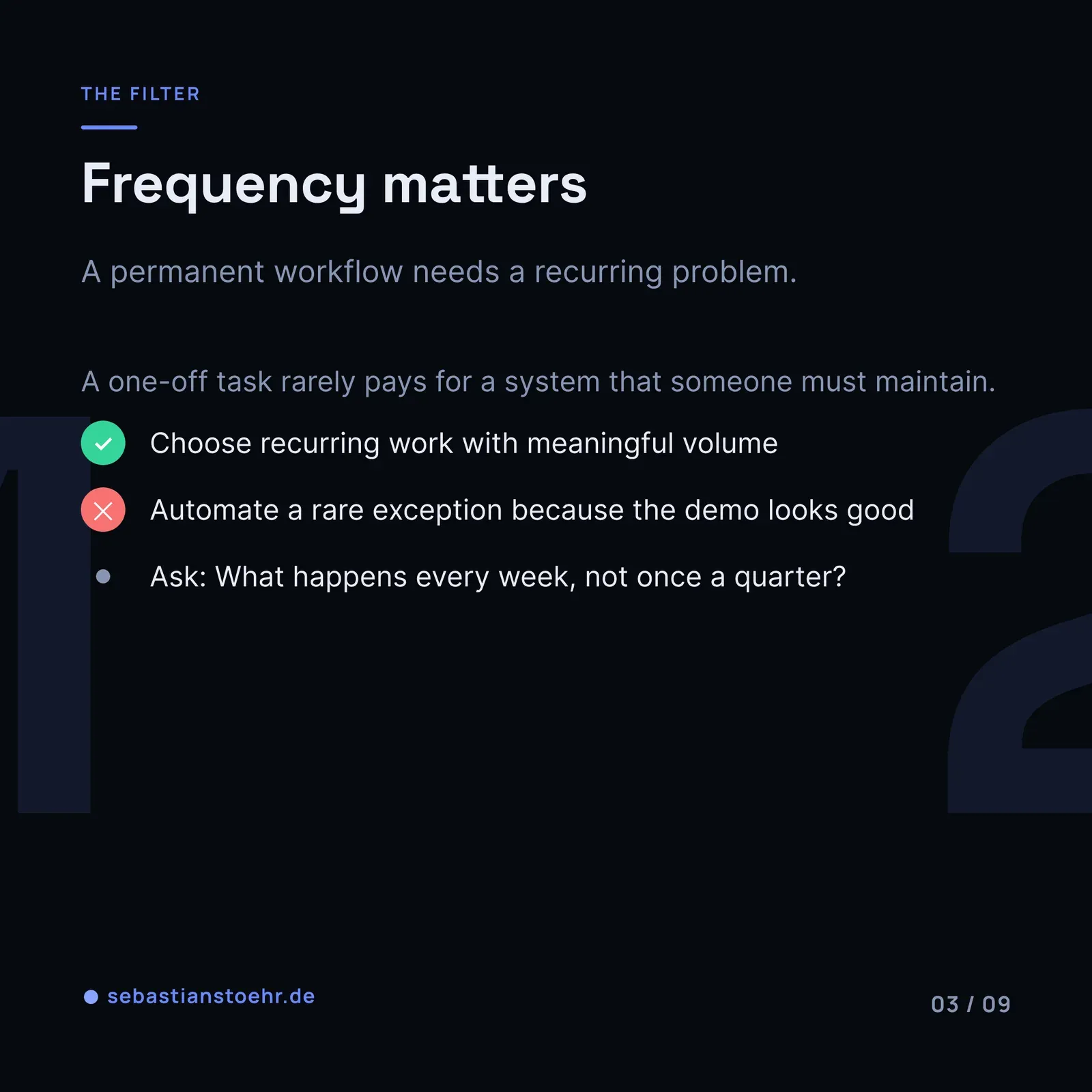
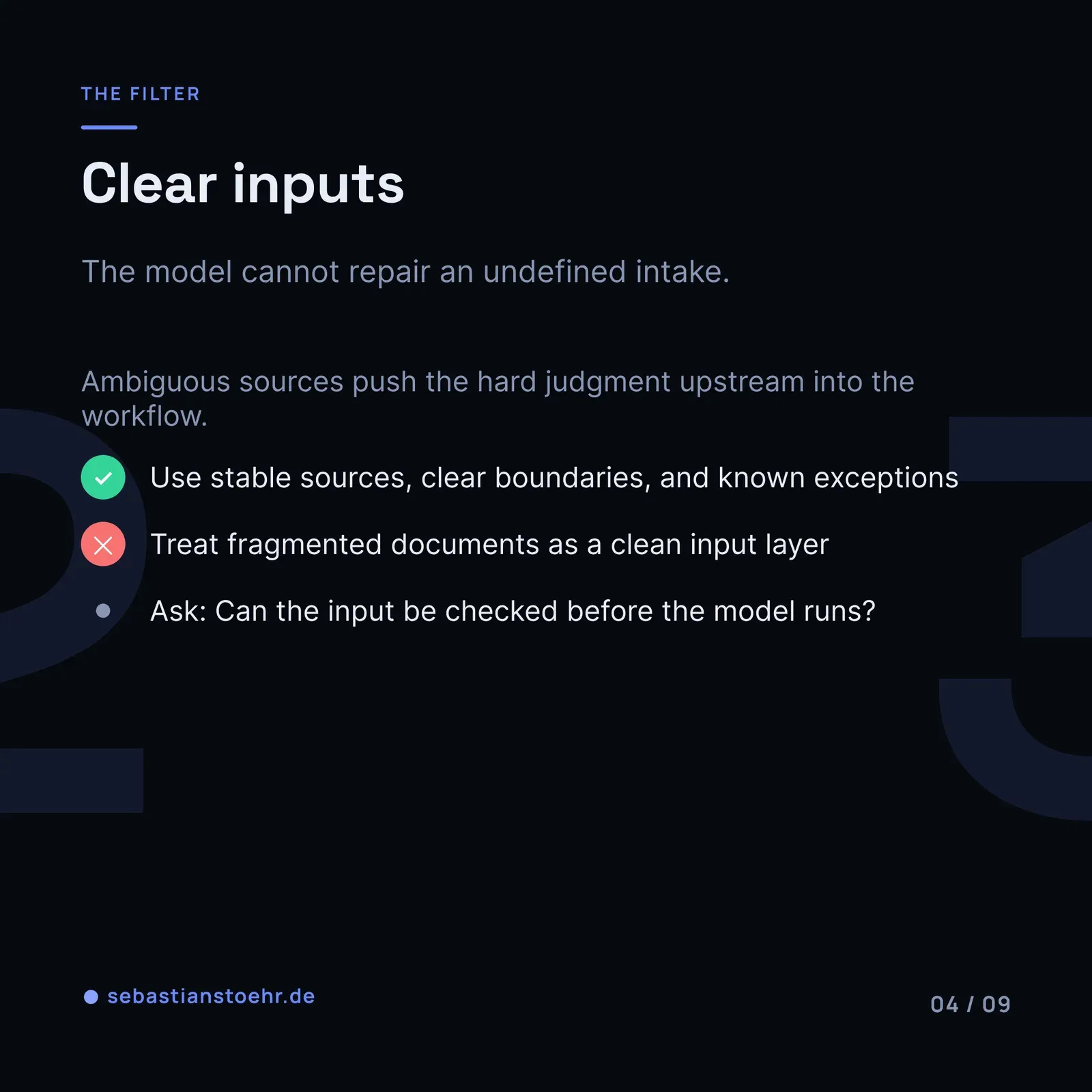
Is the workflow frequent enough to matter? Is the input clear enough? Can a human review the output without doing the whole job again? Would a mistake be recoverable? Does someone actually own the process? Can quality be measured in a way the team believes? Does this reduce real friction, or just create a nicer interface on top of the same mess?
One question is especially useful: what happens if this becomes business-critical?
If nobody wants to answer that, the use case is probably not ready to become a system.
The best “no” often creates a better “yes”
Saying no to a use case does not have to mean abandoning the problem.
Often it means changing the shape of the problem.
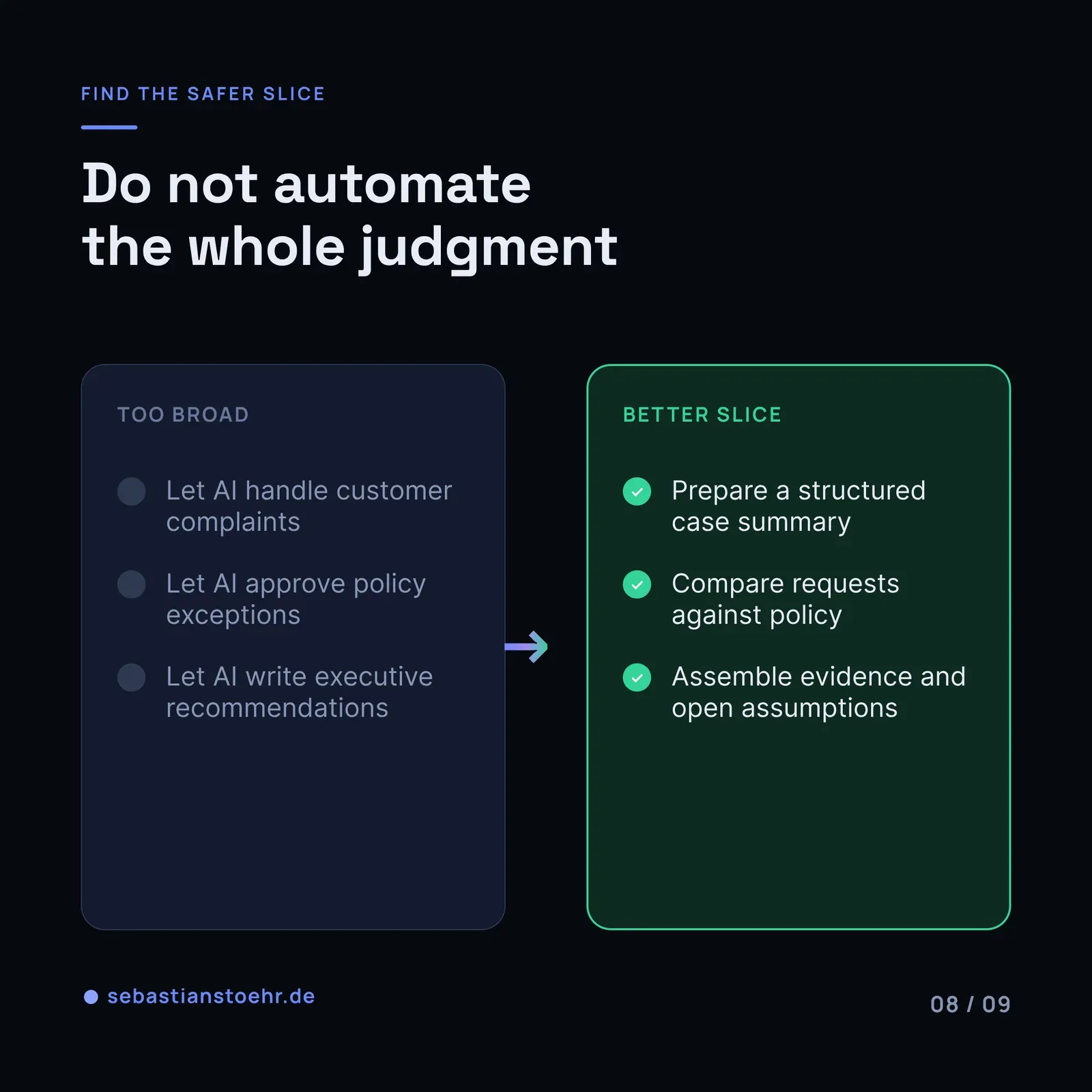
- “Let AI handle customer complaints” may be too broad. “Let AI prepare a structured case summary for a human agent” may be useful.
- “Let AI approve policy exceptions” may be too risky. “Let AI compare the request against policy and flag missing information” may be safe.
- “Let AI write executive recommendations” may be too vague. “Let AI assemble the evidence and list open assumptions” may be a good workflow.
The mature move is not to ask whether AI can do the whole thing. It is to find the slice where AI improves the work without pretending to own judgment it should not own.
Not every AI use case deserves to exist. The ones that do should be treated seriously enough to survive beyond the demo.